Monday Mar 30, 2020
Conversation with one of My Supporters
The Ralph William Podcast
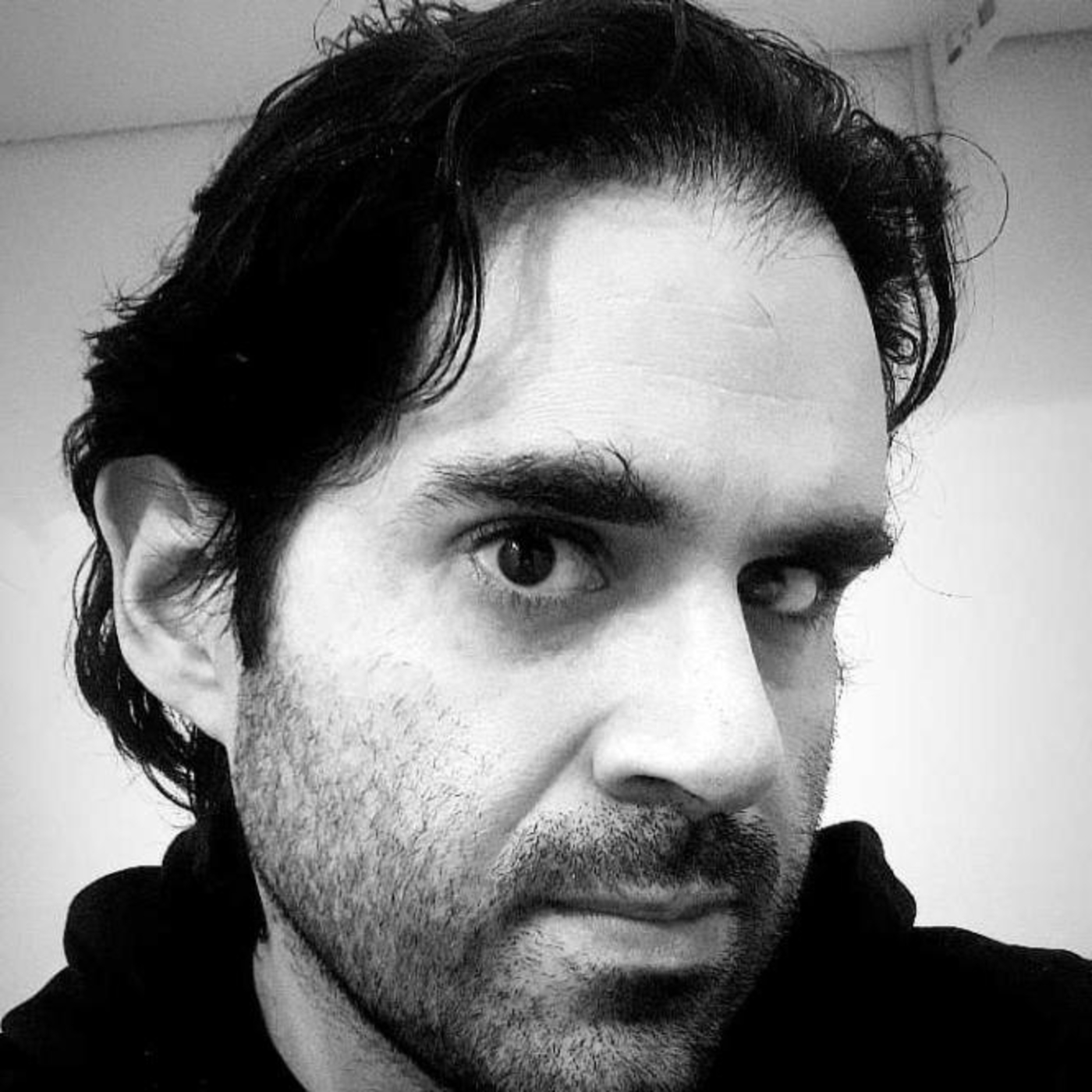
A brief dialogue about topics in our society. From Politics to personal interests like music and health. Download the internet radio station W-ESN Epic Strategies Network from your app stores. Ask Alexa "Start w-esn live".
Listen on:




Episodes
Episodes


Friday Mar 27, 2020
Friday Mar 27, 2020
Thank you for checking out my podcast. Feel free to check me out on Mixcloudhttps://www.mixcloud.com/DJEOH1/
On Youtubehttps://www.youtube.com/channel/UCt3exlyoUgffpkUjxAVOQcA?view_as=subscriber
Dont forget my Instagram as wellhttps://www.instagram.com/eyeonhealth/
Good Quality Reasonable price on shoes and other items on ebay:https://www.ebay.com/usr/fabfabe81
Check out my Live stream on podbean on Wednsdays.Download the podbean app and get involved in the livestream.
If You feel generouse here is a link for supporthttps://paypal.me/eyeonhealth?locale.x=en_US
https://daily.jstor.org/three-ways-to-turn-your-apartment-into-a-sustainable-garden/If you have no outdoor options, you can green your inside space. Who says you can’t have an herb garden on your wall? Vertical horticulture goes back to the Hanging Gardens of Babylon. More recently, living walls have become a popular trend, partially in response to the increasing urban population density.
Small planters can be attached to the walls. Because small pots dry out quickly, vertical gardens are best combined with an automatic watering system that is programmed to supply water to each pocket for a few minutes a day. You will also need to keep all that moisture away from the wall, so stretching a piece of plastic between the wall and the planters is a good idea.
https://savvygardening.com/7-steps-to-grow-potatoes-in-small-spaces/growing potatoesStart your tater-growing adventure by deciding what variety of potato to grow. Russets are great for baking and storing, fingerlings are perfect pint-sized spuds, and heirloom varieties come in a rainbow of colors and textures (the potato in the feature image is an heirloom called ‘All Blue‘). No matter what type you choose, be sure to purchase certified disease-free seed potatoes from a reliable source.Officially speaking, seed potatoes aren’t seeds at all. They’re fully developed potatoes that are cut into pieces and planted like a seed. Use a clean, sharp knife to cut each tuber into several sections, being sure each section contains at least one “eye” and an inch of flesh. Let the cut potatoes rest for 24-48 hours before planting. This rest period enables the cut area to callous over and helps keep soil-borne diseases from rotting the tuber before it can grow.Put the cut seed potato sections on top of the compost/potting soil blend. How many seed potatoes you add will depend on the bin’s diameter. When I grow potatoes in small spaces using this technique, I usually put eight to ten pieces per bin. Then, I cover the seed potatoes with another three inches of the potting soil/compost mix. Over the coming weeks, as the plants grow, fill the rest of the container little-by-little with the compost mix until it reaches the top. This technique serves the same function as “hilling” does – it allows more stem area below ground for potato production.The only negative when you grow potatoes in small spaces like this is the constant need to water. Potatoes need to be consistently moist, so a daily dousing during summer’s heat is an absolute must. If Colorado potato beetles become problematic, cover the plants with floating row cover.The potatoes are ready to harvest after the plants turn completely brown and die. Allow the tubers to sit in the ground two to three weeks beyond the death of the plants. This resting period is necessary to harden off the skins and make them better able to withstand long periods of storage. To harvest, simply open the wire cylinder and dig through the soil with your hands to uncover the spuds.70 to 120 daysIt is tempting to harvest potatoes as soon as possible to enjoy them in meals but different varieties can take anything from 70 to 120 days to growSurprisingly, potatoes offer a complete protein if you eat enough, over 10 per day. But you would ultimately encounter deficiencies in vitamins A, B12 and E, and calcium and selenium if you keep to just potatoes.
https://www.wikihow.com/Grow-Potatoes-Indoors
https://www.youtube.com/watch?v=GvuoCJnKcZE&t=1s
https://www.youtube.com/watch?v=M1YYH9Vtbn4
https://www.youtube.com/watch?v=B6ZguOZAW4A&t=628s
https://www.youtube.com/watch?v=5P-w4SM-4u8
https://www.youtube.com/watch?v=nRaJ3taB07k
Rainwater Collectionhttps://www.quora.com/How-do-I-setup-rain-water-harvesting-in-an-apartmentThere are, primarily, two sources from where you can collect water.
Surface runoffRoof topOut of the two, the roof top version is more popular because it is easier to implement. In apartment complexes, a combination of both is the best way to maximize the amount of water collected.Conduit for transportation – Pipes or drains that allow the passage of water collected on catchments to reach the storage location. There are specifications for such conduits though. Drains on rooftops require a mesh at the opening to filter out debris and the ones that collect runoff too should have the ability to prevent particulate material from mixing with the water. All pipes used in rainwater harvesting are supposed to be UV resistant.First flush – There are ample pollutants and toxic agents that are suspended in the air. First showers often wash such particulate material and rain on us. This water is unsuitable for any consumption. So whatever system we set up must be capable of first discarding the initial collection and storing only the water that comes in the later showers. First flush system makes sure that water collected during the first spell is collected and taken away elsewhere and not to the main storage intended for storing rainwater. Having this system in place also acts as a way to clean the transportation pipes.Filter – Not having a filter system in place is like sending out an invite to pollutants to come and contaminate your stored water. Filters remove debris, turbidity, some microorganisms and sometimes color too. A typical filter system will have the following layers, in respective order – gravel, sand and mesh filter called netlon which also forms the topmost layer of the storage tank.Storage – This is a component that can’t have hard and fast criteria. The storage tank often changes properties depending on the nature, amount, and quality of rainwater that is collected.The collected rainwater often has two uses – direct use and to replenish natural aquifers. For direct usage, the water collected in storage tanks is supplied via pipelines and then finally to faucets from where it can be drawn for use. In the second use case, the water is often used to replenish ground water reservoirs like borewells, trenches or percolation tanks.Another alternative, a rather primitive one would be to use vessels in each balcony to collect whatever little rain that falls there. A thin muslin cloth placed over the mouth of the vessel will act as a basic filter. This water can be used for domestic cleaning purposes.
Monday Mar 23, 2020
Monday Mar 23, 2020
Thank you for checking out my podcast. Feel free to check me out on Mixcloudhttps://www.mixcloud.com/DJEOH1/
On Youtubehttps://www.youtube.com/channel/UCt3exlyoUgffpkUjxAVOQcA?view_as=subscriber
Dont forget my Instagram as wellhttps://www.instagram.com/eyeonhealth/
Good Quality Reasonable price on shoes and other items on ebay:https://www.ebay.com/usr/fabfabe81
Check out my Live stream on podbean on Wednsdays.Download the podbean app and get involved in the livestream.
If You feel generouse here is a link for supporthttps://paypal.me/eyeonhealth?locale.x=en_USwink).
https://www.scientificamerican.com/article/lunacy-and-the-full-moon/ Roman goddess of the moon bore a name that remains familiar to us today: Luna, prefix of the word “lunatic.” Greek philosopher Aristotle and Roman historian Pliny the Elder suggested that the brain was the “moistest” organ in the body and thereby most susceptible to the pernicious influences of the moon, which triggers the tides. Belief in the “lunar lunacy effect,” or “Transylvania effect,” as it is sometimes called, persisted in Europe through the Middle Ages, when humans were widely reputed to transmogrify into werewolves or vampires during a full moon.In 2007 several police departments in the U.K. even added officers on full-moon nights in an effort to cope with presumed higher crime rates. The human body, after all, is about 80 percent water, so perhaps the moon works its mischievous magic by somehow disrupting the alignment of water molecules in the nervous system.First, the gravitational effects of the moon are far too minuscule to generate any meaningful effects on brain activity, let alone behavior. George Abell of the University of California, Los Angeles, noted, a mosquito sitting on our arm exerts a more powerful gravitational pull on us than the moon does. Yet to the best of our knowledge, there have been no reports of a “mosquito lunacy effect.” Second, the moon’s gravitational force affects only open bodies of water, such as oceans and lakes, but not contained sources of water, such as the human brain. Third, the gravitational effect of the moon is just as potent during new moons—when the moon is invisible to us—as it is during full moons.Second, the moon’s gravitational force affects only open bodies of water, such as oceans and lakes, but not contained sources of water, such as the human brain. Third, the gravitational effect of the moon is just as potent during new moons—when the moon is invisible to us—as it is during full moons.In all cases, they have come up empty-handed. By combining the results of multiple studies and treating them as though they were one huge study—a statistical procedure called meta-analysis—they have found that full moons are entirely unrelated to a host of events, including crimes, suicides, psychiatric problems and crisis center calls. In their 1985 review of 37 studies entitled “Much Ado about the Full Moon,” which appeared in one of psychology’s premier journals, Psychological Bulletin, Rotton and Kelly humorously bid adieu to the full-moon effect and concluded that further research on it was unnecessary.
Persistent critics have disagreeLunacy and the Full MoonCredit: Courtesy of Ninomy at Wikimedia“It is the very error of the moon.She comes more near the earththan she was wont. And makesmen mad.”—William Shakespeare, Othello
ACROSS THE CENTURIES, many a person has uttered the phrase “There must be a full moon out there” in an attempt to explain weird happenings at night. Indeed, the Roman goddess of the moon bore a name that remains familiar to us today: Luna, prefix of the word “lunatic.” Greek philosopher Aristotle and Roman historian Pliny the Elder suggested that the brain was the “moistest” organ in the body and thereby most susceptible to the pernicious influences of the moon, which triggers the tides. Belief in the “lunar lunacy effect,” or “Transylvania effect,” as it is sometimes called, persisted in Europe through the Middle Ages, when humans were widely reputed to transmogrify into werewolves or vampires during a full moon.
Even today many people think the mystical powers of the full moon induce erratic behaviors, psychiatric hospital admissions, suicides, homicides, emergency room calls, traffic accidents, fights at professional hockey games, dog bites and all manner of strange events. One survey revealed that 45 percent of college students believe moonstruck humans are prone to unusual behaviors, and other surveys suggest that mental health professionals may be still more likely than laypeople to hold this conviction. In 2007 several police departments in the U.K. even added officers on full-moon nights in an effort to cope with presumed higher crime rates.
ADVERTISEMENTWater at Work?Following Aristotle and Pliny the Elder, some contemporary authors, such as Miami psychiatrist Arnold Lieber, have conjectured that the full moon’s supposed effects on behavior arise from its influence on water. The human body, after all, is about 80 percent water, so perhaps the moon works its mischievous magic by somehow disrupting the alignment of water molecules in the nervous system.
But there are at least three reasons why this explanation doesn’t “hold water,” pardon the pun. First, the gravitational effects of the moon are far too minuscule to generate any meaningful effects on brain activity, let alone behavior. As the late astronomer George Abell of the University of California, Los Angeles, noted, a mosquito sitting on our arm exerts a more powerful gravitational pull on us than the moon does. Yet to the best of our knowledge, there have been no reports of a “mosquito lunacy effect.” Second, the moon’s gravitational force affects only open bodies of water, such as oceans and lakes, but not contained sources of water, such as the human brain. Third, the gravitational effect of the moon is just as potent during new moons—when the moon is invisible to us—as it is during full moons.
There is a more serious problem for fervent believers in the lunar lunacy effect: no evidence that it exists. Florida International University psychologist James Rotton, Colorado State University astronomer Roger Culver and University of Saskatchewan psychologist Ivan W. Kelly have searched far and wide for any consistent behavioral effects of the full moon. In all cases, they have come up empty-handed. By combining the results of multiple studies and treating them as though they were one huge study—a statistical procedure called meta-analysis—they have found that full moons are entirely unrelated to a host of events, including crimes, suicides, psychiatric problems and crisis center calls. In their 1985 review of 37 studies entitled “Much Ado about the Full Moon,” which appeared in one of psychology’s premier journals, Psychological Bulletin, Rotton and Kelly humorously bid adieu to the full-moon effect and concluded that further research on it was unnecessary.
Persistent critics have disagreed with this conclusion, pointing to a few positive findings that emerge in scattered studies. Still, even the handful of research claims that seem to support full-moon effects have collapsed on closer investigation. In one study published in 1982 an author team reported that traffic accidents were more frequent on full-moon nights than on other nights. Yet a fatal flaw marred these findings: in the period under consideration, full moons were more common on weekends, when more people drive. When the authors reanalyzed their data to eliminate this confounding factor, the lunar effect vanished.
Where Belief BeginsSo if the lunar lunacy effect is merely an astronomical and psychological urban legend, why is it so widespread? There are several probable reasons. Media coverage almost surely plays a role. Scores of Hollywood horror flicks portray full-moon nights as peak times of spooky occurrences such as stabbings, shootings and psychotic behaviors.
ADVERTISEMENTPerhaps more important, research demonstrates that many people fall prey to a phenomenon that University of Wisconsin–Madison psychologists Loren and Jean Chapman termed “illusory correlation”—the perception of an association that does not in fact exist. For example, many people who have joint pain insist that their pain increases during rainy weather, although research disconfirms this assertion. Much like the watery mirages we observe on freeways during hot summer days, illusory correlations can fool us into perceiving phenomena in their absence.
Illusory correlations result in part from our mind’s propensity to attend to—and recall—most events better than nonevents. When there is a full moon and something decidedly odd happens, we usually notice it, tell others about it and remember it. We do so because such co-occurrences fit with our preconceptions. Indeed, one study showed that psychiatric nurses who believed in the lunar effect wrote more notes about patients’ peculiar behavior than did nurses who did not believe in this effect. In contrast, when there is a full moon and nothing odd happens, this nonevent quickly fades from our memory. As a result of our selective recall, we erroneously perceive an association between full moons and myriad bizarre events.
https://thenewswheel.com/are-car-crashes-more-likely-to-happen-during-a-full-moon/the British Medical Journal published a study that analyzed records of over 13,000 motorcycle fatalities throughout the United States from 1975 to 2014 (40 years) to see if there was a correlation between the presence of a full moon and the number of motorcycle accidents. The results revealed a 5% increase in the chance of a fatal motorcycle accident on full moon nights compared to ones without a full moon. Supermoons showed to be even worse for safety, increasing the likelihood by 32%.https://www.discovermagazine.com/mind/why-do-we-still-believe-in-lunacy-during-a-full-moonit was probably easy for people to find evidence for their suspicion that bad things happened when the moon was full. “Our brains tend to be predisposed to seeing patterns, even when they’re not actually existent,” says Lilienfeld. “Once people have an idea in their head that the full moon is linked to odd behaviors, […] they may end up seeking out, even unintentionally, instances in which there is a full moon and something strange happens.” We don’t pay attention to the uneventful full moons, but the strange ones stand out. our brains operate on a “better safe than sorry” model. The same goes for keeping an eye on the full moon.
https://xtown.la/2019/07/16/full-moon-crime/For all of last year, seven of the full moon days reported a slightly higher reported crime count than the month’s daily average. And five of the full moon days saw a lower reported crime count than the month’s daily average.
However, there was one outlier. A full moon day when crime soared. On Jan. 1, 2018, there were 980 crime reports, more than 300 above an average January day. Of course, the full moon just happened to fall on the first day of the year, when revelry from New Year’s Eve extends into the wee hours, and crimes that may be part of Dec. 31 celebrations are technically Jan. 1 crimes after midnight. https://www.psychologytoday.com/us/blog/sleep-newzzz/201605/does-full-moon-disrupt-your-sleepsleep patternshttps://www.psychologytoday.com/us/blog/sleep-newzzz/201308/is-the-moon-affecting-your-sleepSwiss scientists conducted a study that suggests sleep is significantly affected by lunar phases. Their results show changes to sleep throughout the moon's 29.5-day cycle, and significant increases to sleep disruption during the time immediately surrounding the full moon.When researchers analyzed their data in relation to the phases of the moon, they found sleep changed significantly throughout the lunar cycle, with disruptions to sleep peaking during the days closest to the full moon.
Sleep latency increased as the full moon approached. On the nights of a full moon, it took people an average of five minutes longer to fall asleep. After the full moon passed, sleep latency began to decrease.People spent 30% less time in slow-wave sleep—the deepest phase of sleep—at the full moon. As the full moon arrived, EEG scans showed brain activity during slow-wave sleep diminished.Melatonin levels dropped during the days surrounding the full moon, with nighttime melatonin levels at their lowest on full-moon nightsOverall sleep time also dropped to their lowest levels—an average of 20 minutes less sleep—on nights with a full moon.Volunteers reported their lowest sleep quality during the full moon phase of the lunar cycle. . Researchers suggest that we may carry within us an internal biological rhythm that is linked to the moon’s cycle. Researchers liken this approximately 30-day “circalunar rhythm” to our circadian rhythms, which regulate several biological functions—including sleep—on a 24-hour cycle, in basic alignment with night and day. Other scientific research has demonstrated links between the phases of the moon and several species of marine life, indicating in these animals the presence of “circalunar clocks” that work in conjunction with their circadian clocks.
https://www.youtube.com/watch?v=9cGNu8yKBkE&t=28shttps://www.youtube.com/watch?v=GUGqraRfGnQ&t=28sGood sleep help clean out waste in the brain. Betaaminloid (plaques) causes alzhimers. Waves of sleep help clean out the brain. spinal fluid washed away the brain garbage.
Friday Mar 20, 2020
Friday Mar 20, 2020
https://msdjhoodie.podbean.com
Thank you for checking out my podcast. Feel free to check me out on Mixcloudhttps://www.mixcloud.com/DJEOH1/
On Youtubehttps://www.youtube.com/channel/UCt3exlyoUgffpkUjxAVOQcA?view_as=subscriber
Dont forget my Instagram as wellhttps://www.instagram.com/eyeonhealth/
Good Quality Reasonable price on shoes and other items on ebay:https://www.ebay.com/usr/fabfabe81
Check out my Live stream on podbean on Wednsdays.Download the podbean app and get involved in the livestream.
If You feel generouse here is a link for supporthttps://paypal.me/eyeonhealth?locale.x=en_US
Monday Mar 16, 2020
Monday Mar 16, 2020
Follow The Why Run Podcast
https://msdjhoodie.podbean.com
Twitter @MsDJhoodie
Instagram MsDJHoodie
Thank you for checking out my podcast. Feel free to check me out on Mixcloudhttps://www.mixcloud.com/DJEOH1/
On Youtubehttps://www.youtube.com/channel/UCt3exlyoUgffpkUjxAVOQcA?view_as=subscriber
Dont forget my Instagram as wellhttps://www.instagram.com/eyeonhealth/
Good Quality Reasonable price on shoes and other items on ebay:https://www.ebay.com/usr/fabfabe81
Check out my Live stream on podbean on Wednsdays.Download the podbean app and get involved in the livestream.
If You feel generouse here is a link for supporthttps://paypal.me/eyeonhealth?locale.x=en_US
Friday Mar 13, 2020
Friday Mar 13, 2020
@TheRalphWilliam on TwitterThank you for checking out my podcast. Feel free to check me out on Mixcloudhttps://www.mixcloud.com/DJEOH1/
On Youtubehttps://www.youtube.com/channel/UCt3exlyoUgffpkUjxAVOQcA?view_as=subscriber
Dont forget my Instagram as wellhttps://www.instagram.com/eyeonhealth/
Good Quality Reasonable price on shoes and other items on ebay:https://www.ebay.com/usr/fabfabe81
Check out my Live stream on podbean on Wednsdays.Download the podbean app and get involved in the livestream.
If You feel generouse here is a link for supporthttps://paypal.me/eyeonhealth?locale.x=en_US
https://thedailyaddict.podbean.com/
Monday Mar 09, 2020
Monday Mar 09, 2020
Thank you for checking out my podcast. Feel free to check me out on Mixcloudhttps://www.mixcloud.com/DJEOH1/
On Youtubehttps://www.youtube.com/channel/UCt3exlyoUgffpkUjxAVOQcA?view_as=subscriber
Dont forget my Instagram as wellhttps://www.instagram.com/eyeonhealth/
Good Quality Reasonable price on shoes and other items on ebay:https://www.ebay.com/usr/fabfabe81
Check out my Live stream on podbean on Wednsdays.Download the podbean app and get involved in the livestream.
If You feel generouse here is a link for supporthttps://paypal.me/eyeonhealth?locale.x=en_US
https://www.discovermagazine.com/health/what-makes-a-morning-person-scientists-identify-new-genetics-behind-early-risersResearchers from other groups previously found 24 genetic variations that affect the daily rhythms of sleep and wakefulness. Altering some of these key genes in mice led to obesity and high blood sugar. Prior studies also reported a link between interrupting people’s sleeping habits and diseases such as type 2 diabetes and depression.n the new study, Jones and colleagues mined data from the genetics testing company 23andMe and the U.K. Biobank, a charity that follows the health of half a million participants and keeps a repository of blood, urine and saliva samples for research use. The scientists analyzed nearly 700,000 people’s genomes and their self-reported sleeping habits. All of the data came from folks with European ancestry.
Merry Morning Larkfound the 24 genetic variants previous studies had landed on, but they also identified another 327 places in the genome that affect when we like to go to and get up out of bed. Further analysis revealed being a morning person correlated with greater well-being and lowered risk for schizophrenia and depression, the researchers report today in the journal Nature Communications.
“The large number of people in our study means we havstudy means we have provided the strongest evidence to date that ‘night owls’ are at higher risk of mental health problems, such as schizophrenia and lower mental well-being,”
https://www.bicycling.com/health-nutrition/a28034761/how-to-become-a-morning-person/
Night Owls seem to be smarter than early birds. NIGHT TYPES HAVE MORE GAME.Evening types weren’t just good at scoring on intelligence tests. They also proved to be prolific lovers—at least according to a 2012 paper in the same journal.Evening types were also more closely linked to infidelity; to take the bird analogy way too far: it seems owls, and not larks, breed cuckolds.Night owls profesional baseball player have a better average than morning players.5. OWLS ARE PARTIAL TO BAD HABITS—NAMELY, SMOKING AND DRINKING.Franklin’s adage about morning . LARKS ARE PERSISTENT, COOPERATIVE, AGREEABLE, CONSCIENTIOUS, AND PROACTIVE.THEY ALSO PROCRASTINATE LESS.Given that larks are generally more compliant and conformist than owls, it comes as little shock to learn that evening types seem to be worse procrastinators. MORNING TYPES MAY BE HAPPIER.This disconnect between conventional daytime expectations and nighttime preference might make life harder for owls in general. Social scientists call this outcome “social jetlag”: evening types that force themselves to wake up early and perform at their peak during the day might cause themselves some sleep loss and emotional distress. They might also be less happy as a result.Is it better to be a morning or night person?Although morning types may achieve more academically, night owls tend to perform better on measures of memory, processing speed and cognitive ability, even when they have to perform those tasks in the morning. Night-time people are also more open to new experiences and seek them out morehttps://www.bbc.com/worklife/article/20171114-why-you-shouldnt-try-to-be-a-morning-person
https://www.youtube.com/watch?v=eFVAXWhLCLM&t=329s
https://www.cnbc.com/2018/05/17/10-highly-successful-people-who-wake-up-before-6-a-m.html1. Bill McNabb, Chairman of the Vanguard Group, wakes up around 5 and gets to his desk by 6:15 a.m.2. Bob Ferguson, Attorney General of Washington State, wakes at 5 a.m. to make breakfast for his family“I’m a big believer that how your day starts is really important,” says Bob Ferguson, Attorney General of the state of Washington.
He wakes between 5 and 6:30 a.m. in order to carve out time for himself and his family.
“First, I have a little personal time — breakfast, coffee, the morning news,” he lists. Then he wakes his children and wife up and begins to make breakfast for the family to enjoy together.
Waking up early, he explains, is the only way for him to make sure that he has time for what matters most.
“It’s easy for meetings to go late at work, or for other events to come up, and I’m not always guaranteed much time with them later in the day, so I liked to lock in that morning time,” says Ferguson.
CNBC: Iconic Denver: Brad Feld 160615Brad Feld at Iconic Devern on June 16, 2016.David A. Grogan | CNBC3. Brad Feld, Venture Capitalist at the Foundry Group, rises anywhere between 5:30 and 9 a.m. to ‘watch the day open up’Venture capitalist Brad Feld occasionally wakes up before 6 a.m., but also warns against wearing yourself too thin.
“Five years ago, I woke up at 5 every morning during the week, regardless of what time zone I was in,” he says. “Then I had a major depressive episode and decided to stop waking up with an alarm clock. I now get up whenever I wake up, which is anywhere between 5:30 and 9 a.m.”
Once he wakes up, Feld weighs himself, brushes his teeth and makes a cup of coffee. He then spends four minutes sitting with his wife and their dogs. “We just sit with our coffee, talk a little and watch the day open up and the birds sing.”
Caroline BurckleKristian Dowling/Getty Images4. Caroline Burckle, U.S. Olympic bronze medalist, rises at 5:30 to work out — without an alarmLike many of the other successful early-risers, Olympic swimmer Caroline Burckle wakes up early in order to work out. She wakes up around 5:30 a.m. and eats an energy bar before beginning a running interval, weight-training or swimming workout.
“I’ve had this routine my entire life,” she says. “Swimming bred me to wake up in the wee hours of the morning from a young age. I try to have two days a week to ‘sleep in’ to 6:30 or 7 a.m.”
What’s more, Burckle says her body will naturally wake up at this early time. “Typically, my internal clock wakes me up about four minutes before my alarm,” she says.
Getty Images5. General Stanley McChrystal, retired U.S. Army four-star general, wakes at 4 a.m. and doesn’t eat until dinnerGeneral Stanley McChrystal’s morning routine is regimented — to say the least. He wakes up around 4 a.m., shaves, exercises for an hour and a half, takes a four or five-minute shower and then goes to the office.
“When I was deployed in Iraq and Afghanistan, my morning routine was pretty much the same, except I would often break it into two parts,” he says.
Even though he spends over 90 minutes working out each morning, the General skips breakfast— and lunch. “I typically don’t eat anything until dinner,” he says. “It just makes me feel better, my body has gotten used to it, and so if I eat before dinner I get kind of sluggish.”
DreamWorks Animation Chairman and moderator Mellody Hobson speaks during “Who Owns Your Screen?” at the Vanity Fair New Establishment Summit, Oct. 9, 2014, in San Francisco.Getty Images for Vanity Fair6. Mellody Hobson, President of Ariel Investments, rises at 4 a.m. to exercise and take a bathMellody Hobson, who serves as the President of Ariel Investments, has been waking up before 6 a.m. for more than two decades.
She wakes up between 4 and 5 a.m. and checks her phone for urgent emails and news alerts before exercising, which consists of running, lifting weights, swimming and cycling. She drinks two liters of water while exercising. When her work out is over, she has two hard-boiled eggs with coffee or tea followed by a bath.
“My bath time is essential personal time,” she explains. “I take a bath every morning, and use the time to decompress and relax. When I’m running outside on cold days in Chicago, I run faster on the return leg, thinking about my bath.”
Melody McCloskey, founder and CEO of StyleSeatSource: StyleSeat7. Melody McCloskey, founder and CEO of StyleSeat, trained herself to get up at 5:45 a.m. For Melody McCloskey, founder and CEO of StyleSeat, rising with the sun is crucial to her productivity and well-being.
“I’ve been getting up early for a few years,” she says. “For a long period of my life I stayed up very late, but I’ve since found my early morning routine to be the best way for me to sustain a high output and to feel balanced and happy throughout the day.”
McCloskey wakes up at 5:45 a.m. and does an hour of organizing. She exercises every day at 7 a.m., either with a personal trainer or in a exercise class like hot yoga, Pilates or TRX.
“Of course it wasn’t easy at first,” admits the CEO. “It was torture getting up that early; I was never naturally a morning person. But now it’s become routine, and I wake up pretty early on weekends too.”
Peter BalytaSource: YouTube/Texas Instruments8. Peter Balyta, President of Education Technology at Texas Instruments, wakes at 5:20 a.m. and does math while exercisingGrowing up in Canada, Peter Balyta would wake up early every morning for hockey practice. “I’m wired to be disciplined, especially when it comes to fitness,” he says.
Today, Balyta serves as the President of Education Technology for Texas Instruments. He says this discipline is a crucial part of his morning routine. Every day he wakes up at 5:20 a.m., eats a banana, drinks a glass of water, scans his email and then hits the gym.
“We start with a warm-up of light stretching, followed by a high-intensity workout of the day, involving constantly changing movements,” he says.
While he is exercising he does mental math to wake up both his mind as well as his body. “Not to geek out too much, but I use simple math to determine transition times and physics to determine how to leverage my body around a barbell,” he says.
MIT President L. Rafael ReifScott Eisen/Getty Images9. L. Rafael Reif, President of M.I.T., gets up at 5 a.m. and rarely skips breakfastThe President of Massachusetts Institute of Technology, L. Rafael Reif, says that maintaining his early morning routine is essential to staying productive and happy.
“I set my alarm for 6 a.m. but I rarely get to hear it — I almost always wake up around 5 or 5:30 on my own,” he says.
The first thing he does is checks his phone. “I’ll try to respond to any urgent messages right away, then I take my phone or tablet to breakfast and read the news while I eat,” says Reif. “After breakfast, I shower, get dressed, and then I’m off to my first meeting of the day.”
He uses breakfast as a time to read and connect with his wife.
“If I don’t have a chance to check my email, I worry about what I’m missing. Even when I do check my email, I still worry,” he says. “And it happens rarely, but if I miss breakfast for some reason, it throws me off for the whole day. The word ‘grumpy’ comes to mind.”
Scott AdamsBob Riha, Jr./Getty Images10. Scott Adams, creator of “Dilbert,” wakes at 4 a.m. to be his ‘smartest’While Scott Adams, creator of the “Dilbert” comic strip does allow for some flexibility, he always wakes up as early as he can — typically between 4 and 6 a.m.
“Some people are just morning people, myself included, so for me it is easy to get up in the morning, that’s the best part of my day,” says Adams. “Typically speaking I’m happiest, smartest, most creative and most optimistic between the hours of 4 and 8 a.m.”
As soon as he wakes up he goes to work in order to take advantage of these creative early hours.
Unlike other early risers, however, Adams does not go to sleep particularly early, usually around 11 p.m., and he admits that being sleep deprived can take its toll.
“Being tired can be dangerous,” he says. “It takes a pretty predictable chunk off your IQ.”
Like this story? Like CNBC Make It on Facebook
Don’t miss:
The president of Pixar starts the day with meditation, a triple espresso and 3 tablespoons of cocoa powderTim Cook says the Class of 2018 needs to face their fears—here’s why Oprah to the Class of 2018: ‘Your job is not who you are’7:18Donald Trump is the ‘poster child of sleep deprivation’: Arianna HuffingtonTrending Now27-year-old millionaire who saves 80% of his income refuses to spend on 2 things3. Brad Feld, Venture Capitalist at the Foundry Group, rises anywhere between 5:30 and 9 a.m. to ‘watch the day open up’4. Caroline Burckle, U.S. Olympic bronze medalist, rises at 5:30 to work out — without an alarm5. General Stanley McChrystal, retired U.S. Army four-star general, wakes at 4 a.m. and doesn’t eat until dinner6. Mellody Hobson, President of Ariel Investments, rises at 4 a.m. to exercise and take a bath7. Melody McCloskey, founder and CEO of StyleSeat, trained herself to get up at 5:45 a.m. For Melody McCloskey, founder and8. Peter Balyta, President of Education Technology at Texas Instruments, wakes at 5:20 a.m. and does math while exercisingGrowing up in Canada, Peter Balyta would wake u9. L. Rafael Reif, President of M.I.T., gets up at 5 a.m. and rarely skips breakfastThe President of Massach10. Scott Adams, creator of “Dilbert,” wakes at 4 a.m. to be his ‘smartest’https://www.mandatory.com/fun/1486189-celebrity-early-birds#7Benjamin FranklinDid you expect us to forget the dude who coined the term, "Early to bed and early to rise makes a man healthy, wealthy, and wise"? This founding father was typically up at 5 a.m. and would wear his clothes to bed so he could just get up and start working. How's that for efficiency?Dwayne 'The Rock' JohnsonThe Rock doesn't just wake up early, he has a whole app dedicated to it available on both Android and iOS. In fact, there's a feature where you can emulate the man himself by waking up at the same time as him every day, which is usually around 5:30 a.m. The Rock is better than you and always has been. Try to be more like him for a change.
Photo: NBC / C
https://www.insider.com/benefits-of-being-a-night-owl-2017-6Night owls might be more creative and more intelligent than early birds, with increased mental stamina late in the day.They may get a burst of late-night physical strength and could also be better at baseball — at least according to a study of MLB players.An earlier study of US Air Force recruits found that night owls scored higher on intelligence tests, and in 2014, a different group of researchers found that night owls in an MBA program also got higher test scores. (Take that, cheery morning people!)
This comes from a study of a tiny, super-selective population, but it's still fascinating. Back in 2011 researchers looked at the batting averages of 16 Major League Baseball Players over two full seasons. The players also completed a questionnaire that determined whether they were a morning or evening person.
Better at BaseballThe results showed that, in games starting before 2 p.m. the morning people did better, posting a batting average of .267, compared to .259 for the evening people. But when in games starting after 8 p.m., the evening people had a much bigger advantage: At that time of night they achieved a batting average of .306, compared to the morning people who batted .252. In other words: When each group of batters got the chance to perform at their preferred time of day, the night owls blew the early birds out of the water. You might say the night owls hit it out of the park (wink, wink).
https://www.youtube.com/watch?v=rmbv7yZ2buEMichael Breus did a TED Talk about this subjectand took an interesting look at it.Lions-ARe the coos Type A Personality make steps up from 4 to 6
Bears-People get up with sun down with moon middle people extroverts and get stuff doneWolves-Night People artists actors authors musicians introverted they don't go step by step they jump around and loyal people intellegentDolphines-They act like lions but have anxiety in public. they have ocd. hormones work on a schedule from chronotype. Eating -you gotta eat at the right time. eating at your chronotype.Caffiene- helps them get rid of cortosol. Wait 90 minutes after waking up. Excersise- Lions run in the am. bears best 730 or 1230. wolves don't like anything in the morning so 6pm excersise.dolphin exsersise is best early for anxiety.
chronotypes change over time babies are lions as we get the teenagrs get up later and sleep later. adulthood it sets for a while but when you get old you become and early bird and eat dinner at 4pm. Can you hack your chronotype. You can but you will have jetlag.preference is to talk to your boss and adjust
Friday Mar 06, 2020
Friday Mar 06, 2020
Thank you for checking out my podcast. Feel free to check me out on Mixcloudhttps://www.mixcloud.com/DJEOH1/
On Youtubehttps://www.youtube.com/channel/UCt3exlyoUgffpkUjxAVOQcA?view_as=subscriber
Dont forget my Instagram as wellhttps://www.instagram.com/eyeonhealth/
Good Quality Reasonable price on shoes and other items on ebay:https://www.ebay.com/usr/fabfabe81
Check out my Live stream on podbean on Wednsdays.Download the podbean app and get involved in the livestream.
If You feel generouse here is a link for supporthttps://paypal.me/eyeonhealth?locale.x=en_US
Feldman and published in the most recent Journal of Basic and Applied Social Psychology. The study, published in the journal's June issue, found that 60 percent of people lied at least once during a 10-minute conversation and told an average of two to three lies.
https://www.scienceofpeople.com/9-things-know-liars/Phone is used to lie the most. Email is the most honest. print is more historical evedince. phone it could be lost.Here’s how you can try spotting a prolific liar:
Prolific liars are those who report that they tell five or more lies per day. Prolific liars tend to be younger, male and have higher occupational statuses.They are likely to lie the most to their partners and children.They are more likely than the average person to believe that lying is acceptable in some circumstances. They are less likely to lie because of concern for others and more likely to lie for their own self-interest, such as to protect a secret.Prolific liars tell five and a half lies for every one white lie told by an average person.Liars Struggle to Answer Why QuestionsIf you suspect someone might be lying to you but aren’t sure, an easy way to find out is to ask them ‘Why?’ questions. It is much more difficult for people to lie about why they did something or why something happened than it is for them to lie about basic facts. If someone struggles to explain their intentions, it’s a major red flag that they are lying.
https://www.ted.com/talks/pamela_meyer_how_to_spot_a_liar?referrer=playlist-5_talks_on_the_truth_about_lyi
men lie more about themselves and women lie to protect others. Strangers lie in the first 3 minutes.extroverts lie more than introverts.speach patternsliars will use distancing language . clinton phrase.
an honest person are going to be cooperative. An honest person are gonna have more strict laws against injustice. law enforceent people will ask you to recite backwards.
Expresion of contempt. one lip corner up and in. usually lies may occur after.
https://www.psychologytoday.com/us/blog/hope-relationships/201507/6-ways-detect-liar-in-just-seconds6 Ways to Detect a Liar in Just SecondsStart by asking neutral questions. By asking someone basic, nonthreatening questions, you are able to observe a response baseline. ...Find the hot spot. ...Watch body language. ...Observe micro-facial expressions. ...Listen to tone, cadence, and sentence structures. ...Watch for when they stop talking about themselves.
Non verbal cuescrossing arms is not for blocking but self sootheand cannot be indicators of decemption.time put in is the best way of detecting. people are always transmiting something at all times.posture, clothing, body language tone .
https://www.youtube.com/watch?v=lvxJoUuG018&t=737sGet trained in ESLEye Blocking, Shoulder Shrugging, and LipLockingEye Blocking. Eyes are closed a little bit longer than usual. Not looking at people. At an airport and you get a phone call you hide away or go to a corner. If your looking aroud people while on the phone the person on the phone can notice that you are distracted.the length of eye closing or blocking matters greatly.
Shoulder Shrugging. They are uncertain about something.
Lip Locking. What We Dont like see or hear our lips disapear.
BS is toxic and orse than lies.The difference between lies and bs. the liear actually knows the truth and wants to alter the agenda. the bser doesn't care. the bs believes his own bs. lies know the truth. People bs thinking it would be easy to pass because of socialcues. how to reduce the bullshit. Call out the bullshit when it happens.Whats the agenda? Why do you think this? 1. Don't call bulshit till sure.2. Be considereat.3. Attack the clain not the person.4. Reduce confusion to an understandable error of reasoning.5. Admit when you bullshit.
https://psychcentral.com/blog/7-ways-to-spot-a-lie/Pay attention to Tone and Sentence StructureWhen people lie their speech tone and cadence may change. They could start speaking with a higher or lower tone than normal, and either speak more slowly or rapidly. Their sentence structure may become more detailed than usual, including very specific information. This again is their brain working in overdriveListen to how they refer to themselves People who are lying tend to avoid using the words “I” or “me” when they are in the midst of a lie. Sometimes they will speak about themselves in the third person by saying things like, “this girl.” This is how they mentally distance themselves from the lie.
https://www.youtube.com/watch?v=CD6bY5MXhVoask the same question in 3 different ways.Stories in reverse.Answer delay. Liars jump to say the lie. Hold your evidence. Don't tell all. Police do this.A partner in crime. Bring another person to see how they react.Expect the unexpected. Throw them a curve ball. It throws them off there game.Sincrinized behavior. Social behavior changes when your lieing. When someone is independant and don't match everyones body language and out of sync with there peers.Ask specific details. When the lie is vauge ask.Vocal changes. Vocal diversity. Vocal uncertanty. avoided 1st person indicators and used vauge language.
https://www.youtube.com/watch?v=tpJcBozuF6A&t=28s
spot a liar in 10 seconds
https://www.youtube.com/watch?v=iuUmghM87xM&t=564sYou must find a baseline first. People who lie will give off a brief sign of dooping delight.psychopaths and narcwill show signs of happiness when doing something deceptive. if you let it happen you deserve to get it done. all indicators are stress indicators. look in clusters in 5 to 10 seconds. Freeze. They stop and freeze "what do you mean".Self Soothing indicators.If the eyes are extremely dialated you are either stoned, extremely attracted to someone or extreme fear. check for insonsistancies. ask questions calabrate answers and repeat. Look for crosses. Legs arms hands. small clusters in time may indicate deception. deviating from the act into character may be an indicator. does voice pitch go up or speed up or inconsistancy. Onis signals
Monday Mar 02, 2020
Monday Mar 02, 2020
Thank you for checking out my podcast. Feel free to check me out on Mixcloudhttps://www.mixcloud.com/DJEOH1/
On Youtubehttps://www.youtube.com/channel/UCt3exlyoUgffpkUjxAVOQcA?view_as=subscriber
Dont forget my Instagram as wellhttps://www.instagram.com/eyeonhealth/
Good Quality Reasonable price on shoes and other items on ebay:https://www.ebay.com/usr/fabfabe81
Check out my Live stream on podbean on Wednsdays.Download the podbean app and get involved in the livestream.
If You feel generouse here is a link for supporthttps://paypal.me/eyeonhealth?locale.x=en_US